Auckland Transport is Actually Pretty Good; But it Could Be Better
4 June 2026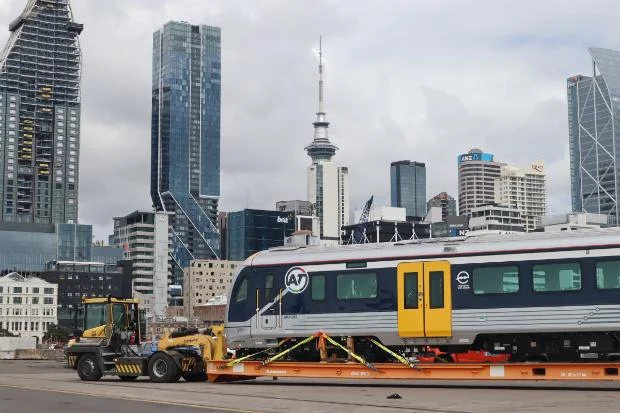
If there was ever an organisation Aucklanders enjoy using as a punching bag, it would have to be AT. They have a reputation for being overly bureaucratic and incapable of providing a decent system. Some of that criticism is fair, and the point of this piece is not to pretend that our transit system is where it should be. At the same time, however, it may be worth reminding ourselves how far our public transit network has come, and how much opportunity it has to grow.
There was a point when Auckland had one of the most extensive tram networks in the world, covering seventy kilometres and carrying around eighty million trips per year. The reason many of the arterial roads in the inner suburbs - Dominion, Great North, Manukau - are so wide, is because they originally had tramways running down them. In 1950, public transport as a whole saw more than one hundred million trips. We could have built upon that existing network, but instead we removed the trams, built the Harbour Bridge to be car-exclusive, and underfunded the entire system for decades. In 1993, there were just over a million trips on our train network, and it was close to being closed altogether. The buses were better, but only marginally.
The turning point for the system was effectively a matter of chance. Perth was electrifying its network, which gave Auckland an opportunity to buy up their surplus diesel multiple units. It’s hard to appreciate now, but our rail system has been undergoing an astonishing revival ever since. In the span of around twenty years, we renovated the existing stations, built Britomart, Newmarket, and several other new stations, double tracked the Western Line, opened branches to Manukau and Onehunga, electrified the entire network, and rolled out new trains across it. On top of all that, we built the City Rail Link, arguably our most ambitious infrastructure project since the Harbour Bridge. We have a long way to go yet, but we have essentially created a modern metro-like system out of thin air, in a timespan that has almost no parallel outside of Asia.
While it started from a more reasonable baseline, our local bus system has also developed into one that is frankly just good, even by international standards. When the Northern Busway was built in the 2000’s, it faced substantial opposition, yet today around half the people who cross the harbour bridge do so by bus. In fact, it’s been such a massive success that it is projected to run out of capacity in the next fifteen to twenty years. There are now programs in the pipeline for Eastern, North-Western, and Upper Harbour busways. Local buses have seen disparate routes consolidated into a much more legible and frequent system, and we are rolling out electric buses across the network.
I apologise for the listing, but it does make the pattern clear. Auckland’s public transport system has seen incredible growth, despite the dampening effect of the COVID epidemic. It has gone from being an underfunded, last-resort alternative to driving to something that people can rely on for reasonably reliable and timely service. That being said, there are still massive gaps in the system that need addressing, and I want to make the case for building on what we have already.
For one thing, Auckland has grown to the point where it is effectively impossible to keep on relying on cars as our sole means of transport. Take the North-Western motorway. It was widened in the 2010’s, but it already struggles to handle existing traffic, let alone future demand from a rapidly expanding West Auckland. Even if we wanted to keep expanding it, that corridor is now physically out of space at many points. By comparison, the Northern Busway is probably the only thing that keeps traffic across the bridge moving at all.
For another, I don’t think Aucklanders are inherently car-centric. We are forced to be by inadequate infrastructure, but as the last few decades have proven, when you provide decent service it gets used. Moreover, I think a lot of us also just want the choice. For those of us too young to have licenses, who can’t afford to own a car, or who just don’t want to have to deal with bad drivers at the end of a long day, there should be an alternative.
For these and a host of other reasons, I would argue we need to continue our current trend of expansion. However, that process is made more difficult by our lack of long term-planning. At present, we simply don’t have a good decision-making process. On one hand, the central government is enslaved by the three-year election cycle and changes direction every time a party loses an election. On the other, Auckland Council tends to have a better understanding of what projects are actually worthwhile, but they are too starved of funds to make ambitious calls on their own. KiwiRail seem disinterested in anything that doesn't involve freight, and Waka Kotahi (NZTA) I would argue, are poorly equipped to do any long term planning on their own.
The outcome of this whole process is that we have no single body to push infrastructure projects. For one, this makes democratic involvement harder. It becomes much more difficult to apply political pressure when the planning of our transport system is so distributed. But more importantly, it makes setting long-term objectives exceedingly difficult. A major part of the CRL’s cost stems from the fact that nobody in New Zealand had experience building metro lines, so we had to build that capacity from the ground up. But now that the CRL is finished, we have no more projects lined up, and all of that expertise is likely to decay again. When we inevitably need to get a rail connection to the North Shore, for instance, we will have to go through that whole learning curve again. Sydney, meanwhile, has their Metro buildout planned twenty years in advance. While they obviously have more funds to work with, they also have a consistent source of direction and funding from the NSW government. Auckland may not be the largest city, but many smaller cities have delivered excellent systems through good long-term planning.
So while we’ve made surprising progress as of late, with ridership numbers recently reaching their highest level in half a century, we still seem to lack the ambition that has characterised so many successful systems elsewhere. This piece barely scratches the surface on the complexities of modernising our transit network, but I would argue that we have no alternative in the long run.